The Science Behind a Brighter, Whiter Smile
Coffee, tea, red wine, spices, and natural aging all gradually deposit stains into the microscopic pores of your dental enamel. It is no surprise that teeth whitening remains one of the most requested cosmetic dental procedures in the world.
However, with hundreds of whitening toothpastes, charcoal powders, and internet kits promising instant results, how do you know what actually works safely without eroding your enamel?
The Problem With DIY & Over-the-Counter Whitening
Store-bought whitening strips and abrasive powders often cause more harm than good:
- Abrasive Damage: Charcoal and whitening pastes work by physically scratching surface enamel. Once enamel wears away, the yellow dentin underneath becomes permanently exposed.
- Chemical Burns & Gum Sensitivity: Ill-fitting generic trays allow peroxide bleach to leak onto delicate gums, triggering painful chemical burns and extreme tooth sensitivity.
- Uneven Results: Generic strips fail to reach deep stains or curved surfaces between teeth, resulting in patchy, inconsistent shading.
The In-Office Advantage at Baldawa Advance Teeth Care
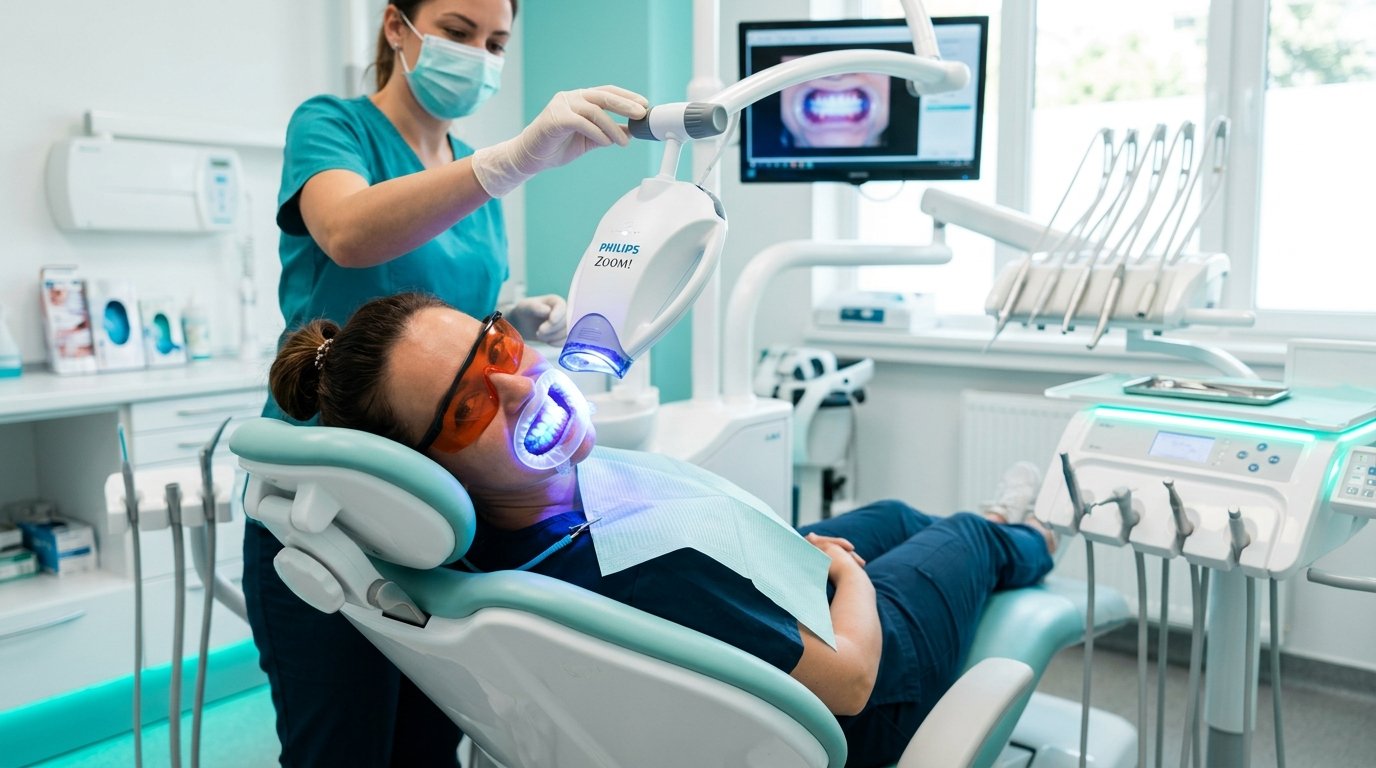
In-clinic professional whitening provides immediate, safe, and dramatically superior results under the supervision of dental experts:
- Gum Barrier Protection: A medical-grade light-cured resin barrier is placed over your gums to guarantee zero sensitivity or irritation.
- Medical-Grade Whitening Gel: Formulated with enamel-strengthening potassium nitrate and fluoride, our pH-balanced whitening agents penetrate deep into intrinsic stains.
- Cold-Light LED Activation: Accelerated blue LED light activates the whitening agent, lifting teeth by up to 6 to 8 shades in just 45 minutes.
"Professional whitening does not remove enamel — it selectively breaks down stain molecules trapped within the enamel matrix, restoring your natural brilliance safely."
Tips to Maintain Your Radiant Smile
Following your whitening session, keep your results dazzling with these habits:
- Adhere to the "White Diet" for 48 hours (avoid dark gravies, red sauces, coffee, and dark sodas).
- Use a soft-bristled electric toothbrush and non-abrasive fluoride toothpaste.
- Rinse with water immediately after drinking coffee or tea.
- Visit your dentist every 6 months for professional routine scaling and polishing.